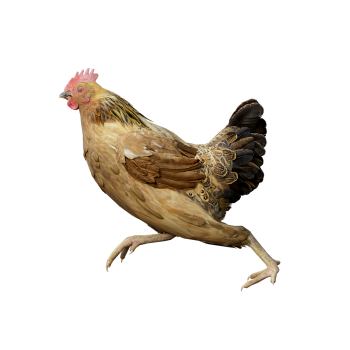
Running Mother Hen 3D Model Animation
It is a species of poultry belonging to the family Pheasantidae in the order Galliformes. Usually raised for egg production and meat supply. Feathers come in a variety of colors, with a smaller body size than roosters, a smaller head, and shorter beaks and claws. The call is relatively soft and is usually used to remind chicks or call out companions. During the feeding process, hens require appropriate feed, a clean environment, and sufficient space. More nutrition and attention are needed during egg laying to ensure egg production rate and quality of eggs. Mother hens play an important role in agriculture and family life, serving as a vital economic and food source in many regions.
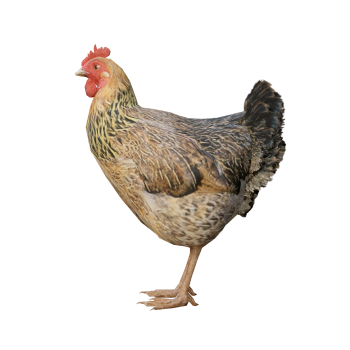
3D model animation of a standing hen
It is a species of poultry belonging to the family Pheasantidae in the order Galliformes. Usually raised for egg production and meat supply. Feathers come in a variety of colors, with a smaller body size than roosters, a smaller head, and shorter beaks and claws. The call is relatively soft and is usually used to remind chicks or call out companions. During the feeding process, hens require appropriate feed, a clean environment, and sufficient space. More nutrition and attention are needed during egg laying to ensure egg production rate and quality of eggs. Mother hens play an important role in agriculture and family life, serving as a vital economic and food source in many regions.

Ordinary sawfish (with 3D animated model)
It is an ancient cartilaginous fish belonging to the sawfish family. Widely distributed throughout the tropical and subtropical waters of the western Atlantic and the Indo Western Pacific region in history. Characterized by its long and flat beak saw, the edge of the beak saw is embedded with sharp beak teeth that are deeply rooted in the hard cartilage and will not grow again. It can reach up to 3 meters in length, and its body color varies depending on the environment. It appears dark gray to golden brown in saltwater and light gray in freshwater. It mainly inhabits shallow coastal waters and feeds on benthic crustaceans and other invertebrates. Due to overfishing and habitat degradation, the population has sharply decreased and is currently listed as critically endangered species, receiving international protection.

Bluebird 3D model with animation
It is a small songbird with a body length of about 14 centimeters, wingspan of 20 to 22 centimeters, weight between 16 and 22 grams, and a lifespan of up to 15 years. Known for its distinctive feather color, the face to chest is blue, forming a sharp contrast with the brown of the lower abdomen, and the upper half of the wings and tail is black. It mainly inhabits the mountains and grasslands of North America, feeding on insects and worms, and occasionally consuming fruits. At the beginning of the 20th century, the number sharply decreased, but through measures such as protection and placement of nest boxes, its quantity has been restored. Distributed in Eurasia and northern Africa.

Bees (with 3D animated models)
It is an important type of insect, mainly divided into several species such as Chinese honey bees, Italian honey bees, Carniola honey bees, and European black bees. Chinese honeybees are indigenous bee species in China, with strong adaptability and good cold resistance, suitable for breeding in mountainous and semi mountainous areas. Italian bees are known for their gentle temperament and strong breeding ability, and are widely distributed in the Mediterranean region and most parts of China. Kaniola bees and European black bees are respectively known for their cold resistance and diligent collection. Bees play an important role in nature, not only as important pollinators, but also producing various products such as honey, beeswax, and propolis.

Cricket (with 3D animated model)
Also known as Textile Maiden, it is a common chirping insect. The adult has a green body color, with a few light brown, well-developed antennae, 2 compound eyes, and 3 single eyes. The life history is one generation per year, with an egg brown color, measuring 6.0mm in length and 1.6-2.0mm in width. The eggs overwinter in the soil layer. The call is loud, and male insects make sounds by rubbing their forewings to attract the opposite sex. It is an omnivorous insect that mainly preys on other insects and sometimes also eats plants. Widely distributed in China, it can be divided into various types based on body color and place of origin, such as green grasshopper, black grasshopper, etc. Not only can it be kept as an ornamental insect, but it can also be utilized as a natural enemy of pests.

3D animation model of white fronted high footed spider
It is a large indoor spider with a body length of about 20-30 millimeters and a total length of up to 100-130 millimeters. They usually hide in the gaps of roofs or cabinets during the day and come out to forage at night, mainly preying on insects such as cockroaches, flies, and moths. The white fronted spider is a nocturnal animal that prefers slightly darker environments. Non toxic, harmless to humans, and can even help control the number of cockroaches in the home. The egg is disc-shaped, and female spiders exhibit egg guarding behavior. In addition, they exhibit a unique ejection phenomenon during mating, with male spiders autonomously ejecting to avoid being killed by female spiders.

Green Duck 3D Model Animation
It is a waterfowl famous for its green feathers and metallic luster on the male's head. The male bird has a white collar around its neck and metal purple blue wing mirrors on its wings. Mainly inhabiting water areas rich in aquatic plants, omnivorous animals that feed on plants and small animals. They are migratory birds, migrating in spring from March to April and in autumn from September to November. They have unique sleeping habits and can turn one eye open or closed during sleep, which helps them stay alert in dangerous environments. In addition, the mallard is the ancestor of Chinese domestic ducks and has important economic and medicinal value. The mallard is also a protected species.

3D animated model of rattlesnake
It is a venomous snake species living in North America, belonging to the Viperidae family. The most prominent feature is a string of keratin rings at the end of the tail, which make a sound when shaken, hence the name "rattlesnake". The body is usually larger, with a sturdy body, a triangular head, and vertical pupils in the eyes. Mainly by sensing heat sources to locate prey, preying on small mammals, birds, and lizards. Venom contains various neurotoxins and blood toxins, which can quickly incapacitate prey. Despite their strong toxicity, rattlesnakes generally do not attack humans without reason and only engage in defensive attacks when threatened.
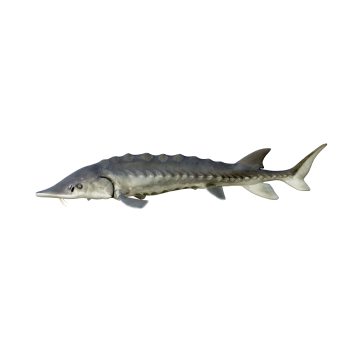
Atlantic sturgeon (with 3D animated model)
It is a large river sea migratory fish that can weigh up to 300 kilograms, age up to 60 years old, and typically measure between 4.3 and 5.3 meters in length. The kiss is long and wide, accounting for about 8% of its total length. The body is covered with 5 rows of bone plates, and the back color ranges from black to brownish gray, while the abdomen is white to gray. Young sturgeons usually inhabit freshwater bodies and gradually migrate towards the ocean as they grow. Food includes aquatic animals and plants, while adult sturgeons are omnivorous and feed on benthic organisms and small fish. The spawning behavior of Atlantic sturgeons is mainly influenced by water temperature, and they choose to lay eggs in flowing water bodies with hard objects such as rocks and pebbles.

Gecko model 3D animation
It is a small reptile belonging to the gecko family of the lizard order. Known for its unique ability to walk freely on vertical walls and even hang upside down from the ceiling. There are thousands of tiny hairs on the soles of the feet, which can generate van der Waals forces with the surface, allowing them to adhere to smooth surfaces. Usually active at night, feeding on insects such as mosquitoes and flies. Highly sensitive to environmental changes, it is often used as a symbol of ecological health. Their regenerative ability is also very strong. If their tail is caught, they can cut off their tail on their own to escape predators, and then their tail can grow back.

3D animation of hammerhead hammerhead shark model
Belonging to the family of hammerhead sharks, it is a unique marine organism. Known for its unique head shape, the head is wide and flat, with one eye on each side, a feature known as a hammerhead or bun. This shape helps them achieve stereoscopic vision underwater and improves their hunting efficiency. Large in size, adult individuals can grow up to about 4 meters in length and weigh up to 500 kilograms. Mainly distributed in tropical and subtropical waters, especially in the warm waters of the Atlantic and Pacific oceans. It feeds on fish, squid, and other marine organisms and is an opportunistic predator. It is ovoviviparous, meaning that young sharks hatch in their mother's body and enter the ocean directly after birth.

frog
Frogs are amphibians belonging to the family Ranidae, with a slightly triangular head that grows wider; Large and protruding eyes; The forelimbs are short, the fingertips are blunt and pointed, the hind limbs are short and thick, and the toes are almost fully webbed. It is most common and abundant in the plains and hilly areas from North China to South China; It is also distributed in Japan, the Korean Peninsula, Russia and other places. Suitable for living in amphibious environments, it mostly inhabits low-lying and humid places such as rivers, ponds, streams, ditches, lakes, and shallow waters with abundant aquatic plants; During the day and at night, they move around and search for food; Both juvenile and adult frogs are carnivorous and typically prey on rice pests.
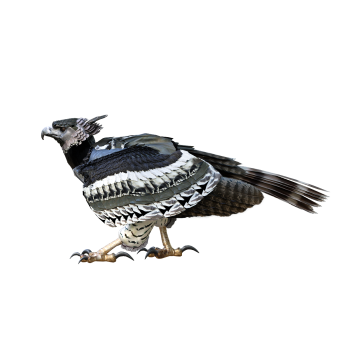
eagle
It is a bird species belonging to the Eagle family in the Eagle shaped order. The beak and claws are both hooked and extremely sharp; Strong physique, sturdy bones, and tight leg muscles; The wings have thick and hard feathers, move rapidly, and fly at a fast speed. Sharp and lively eyes, the color of the eyeballs and the shape of the claws are identical to those of a lion; Breathing heavily and shouting loudly. Female birds are larger in size than male birds. It is named after attacking other birds with its feathers. It mostly inhabits open plains, grasslands, and low mountain and hilly areas. Nesting on high trees or cliffs. During the day, he often flies alone in the sky, with a quick witted personality and sharp eyesight. The main food is birds, rodents, snakes, and insects, as well as poultry and decaying corpses.
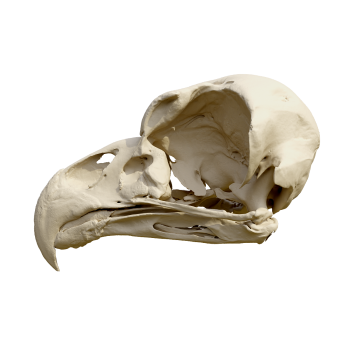
Eagle owl skull
The eagle owl is a bird species belonging to the family Scombridae in the order Scombriformes. No significant facial features; The upper body is dark brown in color, with black transverse spots on the tail feathers; The throat and forehead are light gray white, and the feather edges are light brown yellow; The remaining part of the lower body is white, with brown longitudinal stripes on the chest and wide reddish brown patches on the abdomen, forming incomplete horizontal spots; Iris bright golden yellow; Mouth peak angle gray or blue black, with a shallow tip; Wax film dark green or green brown; The tarsus is dark yellow or yellow green. Distributed in eastern to southern Asia, and in northeastern, northern, and eastern China. Nocturnal, active at dusk or night. The food is mainly insects, but also includes frogs, lizards, birds, rodents, etc.

Pigeon skull
Pigeons are animals of the pigeon genus in the pigeon family of the pigeon shaped order. The body length is 295-360 millimeters. The head, neck, chest, and upper back are slate gray, with metallic green and purple flashes on the upper back and front chest. The rest of the back is light gray, with a black horizontal spot on each wing. The tail feathers are slate gray, with a wide black horizontal spot at the end, similar to males and females. Widely distributed, except for Antarctica, high latitude regions in the Northern Hemisphere, and extremely arid areas in deserts. Most of them inhabit forests or forests, while some inhabit open areas or near cliffs. Active during the day and returning to their nest at night, but trained pigeons can fly at night if they do not return to their habitat before evening.

Soft shell glans bone
Soft shelled turtles, also known as soft shelled turtles, refer to aquatic turtles belonging to the order Turtles and family Turtles. Soft shelled turtles are distributed in freshwater streams and lakes in Asia, Africa, and North America. The characteristics of soft shelled turtles are a round, soft crust like pancake, webbed legs, a long head and neck, and nostrils located at the front of the fleshy long nose (female turtles are noticeably larger than male turtles). There are two main species of soft shelled turtles in the New World, the prickly soft shelled turtle and the smooth soft shelled turtle, whose dorsal shells are gray or brown. The smooth shell turtle has a shell length of about 35 centimeters, while the soft shell turtle has a shell length of about 45 centimeters, mainly distributed in the United States. There are two species of soft shelled turtles in the Old World: African turtles and Malay turtles.

Green iguana skull
The green iguana is an animal belonging to the genus of American green iguanas in the family Hymenonidae of the order Perciformes. Young green iguanas typically have a green body and use it to evade attacks from predators; As one grows older, green will gradually fade away and be replaced by colors such as light yellow, light blue, or brown; The main features of green iguanas include comb like scales on the back, black circular stripes on the tail, and large, drooping throat fans in adult males. Also known as: American Green Iguana. Distributed in tropical rainforest areas from Mexico to Paraguay in Central and South America. Omnivorous animals primarily consume small insects, eggs, and other animal based foods during their infancy, and eventually transition to plant-based diets in adulthood

Frog skull
Frogs (a species of amphibian in the family Ranidae) have a slightly triangular head that grows wider; large and protruding eyes; short forelimbs, blunt toes, short and thick hind limbs, and almost full webbed toes; and a rough back. They are most common and abundant in plains and hilly areas from North China to South China, suitable for living in amphibious environments. They often inhabit low-lying and humid places such as rivers, ponds, streams, ditches, lakes, and shallow waters with dense aquatic vegetation. They are active during the day and night, searching for food at night. They are carnivorous and usually prey on small insects, but can also swallow fish meat and the organs of chickens, ducks, and fish.

Worm lizard skull
The Rhineura floridana, also known as the worm lizard, belongs to the suborder Lizards, family Loricariidae, and is a reptile., Produced in North America; Cave in the soil, sand, and soil layers mainly composed of decaying plant matter (such as fallen leaves) on the Florida Peninsula. Body length 18-35 centimeters (7-12 inches), peach colored. Looks like a snake. Immediately return to the cave when startled, and enter the cave first at the tail. No limbs, or no external eyes or ears. I spend most of my life underground, feeding on worms, spiders, and termites.

Turtle skull
Pelodiscusssine is a reptile belonging to the family Turtles in the order Turtles, commonly known as turtle, grouper, water fish, turtle, and foot fish. It has an elliptical shape and is flatter than a turtle. They live in rivers, lakes, ponds, reservoirs and mountain streams, and hibernate at the bottom of the pool in winter. Xiyang is afraid of wind, Xijing is afraid of shock, Xijie is afraid of dirt, and Xidong and climbing are preferred. They move more frequently along the quiet, clean, and sunny waterfront. Soft shelled turtles have a wide and diverse diet, mainly consisting of animal based foods, as well as decaying plants and tender aquatic plants. They have strong hunger tolerance and are classified as ectothermic animals. Their feeding and growth vary with changes in water temperature.

Giant Salamander Skull
The giant salamander (Andrias davidianus), also known as the fire lizard, has a total length of 12-15 centimeters, obvious grooves between its ribs, no lung structure, and relies entirely on its skin for gas exchange. It inhabits karst geological caves and lives in water, with high requirements for water quality. Feed on benthic cephalopods, annelids, and aquatic invertebrates. There are about 400 species of the largest amphibians in the world. They mostly inhabit freshwater and swamp areas, mainly in temperate regions of the Northern Hemisphere. It is a first-class protected animal in China. Salamanders mainly feed on insects, worms, snails, and some small animals.

Snapper skull
The Sparidae family refers to the phylum Chordata, suborder Vertebrates, order Perciformes, suborder Percoidei, and order Perciformes. The appearance of undergraduate fish is similar to that of the family Cichlidae or the family Percoidei, but the body size of the snapper is higher and more flattened; The incisors, canine teeth, and molars on both sides of the upper and lower jaws are relatively developed. The body is elliptical or oval in shape, with a large head and a higher front half. The back edge is curved, and the abdominal edge is relatively flat. As an important economic fish species along the coast of our country, it belongs to advanced edible fish. Likes to forage in small groups. Omnivorous, mainly feeding on benthic crustaceans, mollusks, echinoderms, or seaweed, occasionally preying on small fish. Androgynous and capable of sexual transformation.

High crowned chameleon skull
Chamaeleocalyptoratus is a type of chameleon named after the towering flesh crown on its head. It is one of the few species found in Asia, while the rest are mostly found in Africa, especially on the island of Madagascar. The high crowned chameleon is named after the towering, hat like crown composed of bone plates on their heads, and is a arboreal diurnal chameleon. The high crown chameleon adapts to a wide temperature range, making them the easiest chameleon species to breed. The main food of omnivorous species is insects, and most chameleons will develop anorexia towards a single food, sometimes refusing to eat until death.

Popular Models


Random Model

Kneeling Shooting Terracotta Warriors
1271 View

Simple Metal Shed
429 View
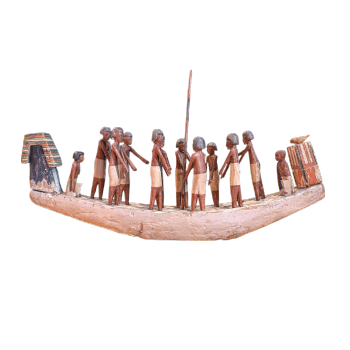
Ancient Egyptian Sun Ship Model
412 View


Small wooden cabinet
504 View

Cat's eye grass
969 View


spotted deer specimen
1131 View